Gular Bhoj and the Haripura and Baur reservoirs: birds, location and what is known
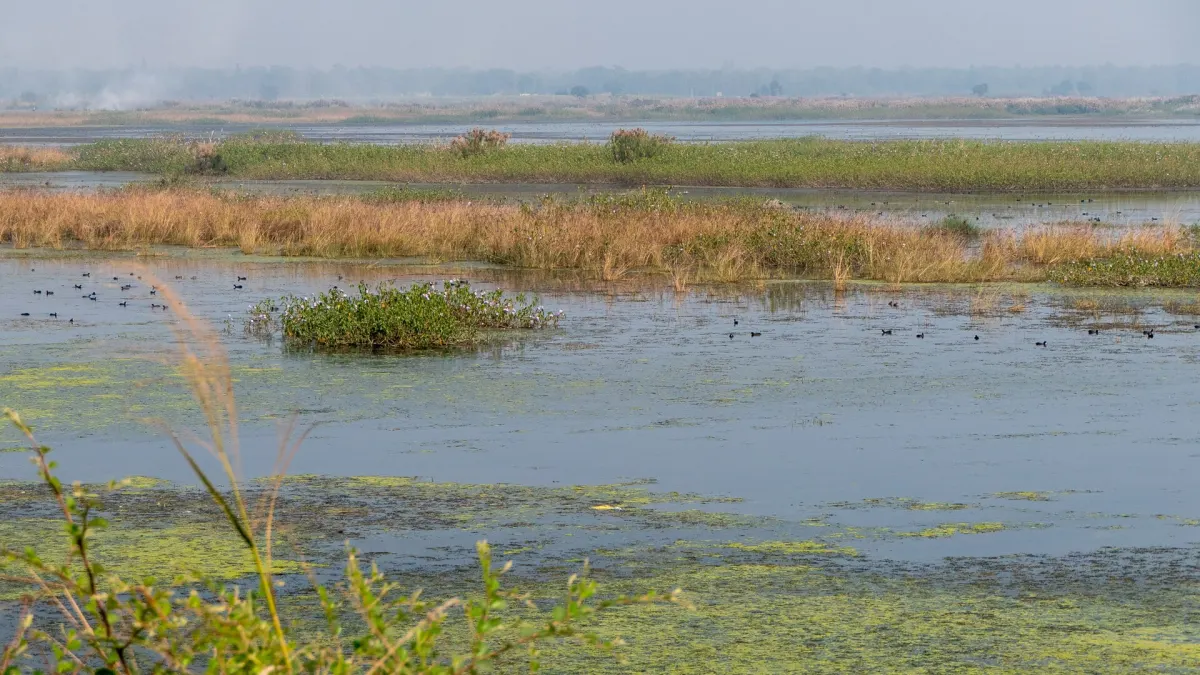
Haripura and Baur are two reservoirs in Udham Singh Nagar district, studied for their water birds. This post collects what is actually published about them, and says plainly where information is missing. Visitor details such as timings, fees and boating are not published by any official source we found, so this is not a trip itinerary. It is a fact sheet for people who want to know what is there before they go.
Where are they?
Haripura and Baur are earthen embankment dams about 15 km from Bazpur, in Udham Singh Nagar district. The coordinates given in the research paper are 29.1350 N, 79.2940 E (Journal of Threatened Taxa).
The area is known locally as Gular Bhoj, or Gularbhoj, which an older tourism page placed in Gadarpur block (eUttaranchal, seen as a search snippet; the page now returns an error). Bazpur and Gadarpur are both tehsils of the district (Wikipedia).
The distance from Rudrapur or Gadarpur is not published by an official source. Use a map and ask locally before you set out.
When and why they were built
The dams were built in 1974 to store water for irrigation, according to the research paper. Another source gives the construction period as 1966 to 1975, so the exact year is not settled.
Which river feeds which reservoir is also given differently:
- The research paper says Haripura is on the Baur and Kakrala rivers, and Baur is on the Bhakhara river.
- A state irrigation department document was summarised by a search tool as saying Haripura is on the Bhakhara. We could not read the text of that file, so treat the river names as uncertain.
Published area figures for the reservoirs do not agree, so we do not quote one here. Check with the irrigation department if you need it.
The birds
A survey from 2013 to 2015 recorded 65 water bird species from 8 orders and 14 families at the two reservoirs (Journal of Threatened Taxa). The paper is by Ahmed, Bargali, Bisht, Mehra and Khan, published in volume 11, issue 9, on 26 July 2019.
Key findings from the paper:
- Dominant species: Common Coot, Red-crested Pochard, Common Pochard, Gadwall and Tufted Pochard.
- Vulnerable species recorded: Asian Woollyneck, Lesser Adjutant and Sarus Crane.
- Near Threatened species recorded: Oriental Darter, Painted Stork, Black-necked Stork and River Lapwing.
- Winter visitors: 29 of the species were winter visitors.
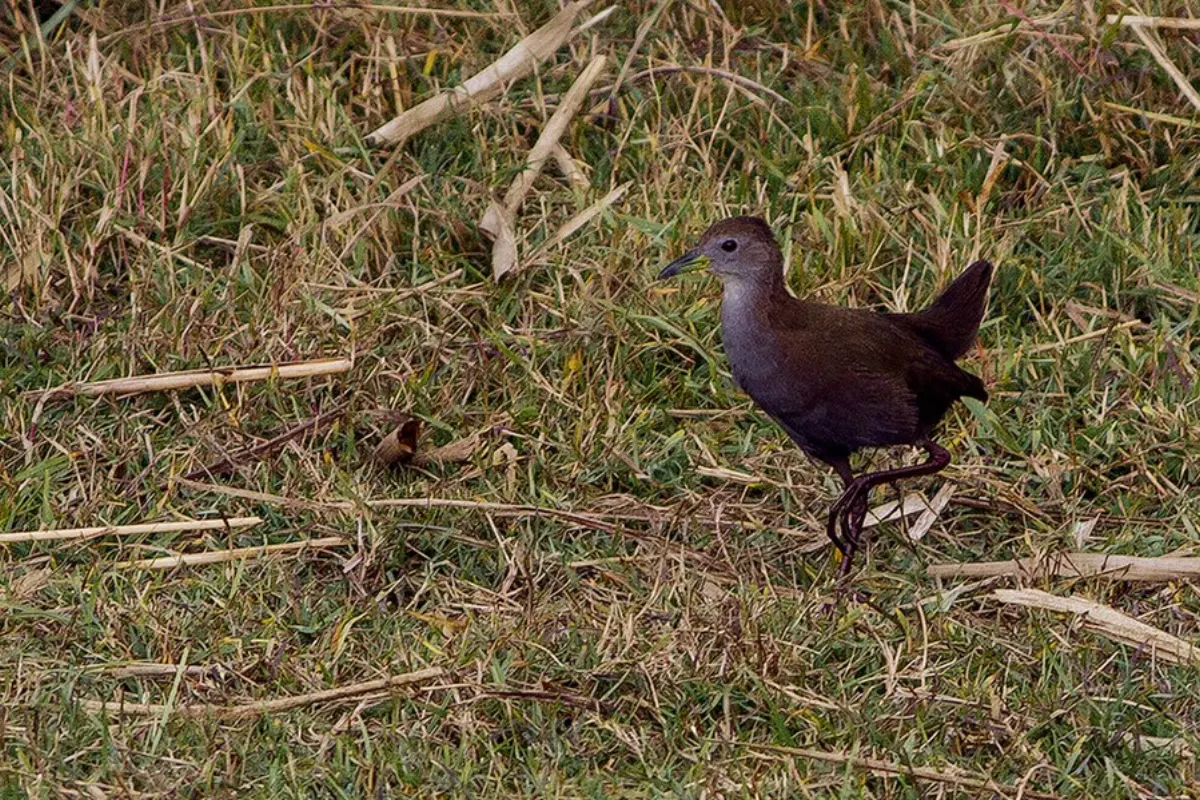
The surveys were held every fortnight in the winter season, from November to February. The photo above shows a Brown Crake at Baur-Haripura, taken in November 2015, and the hero photo shows shallow water, reeds and floating water birds at Baur Reservoir.
Earlier water bird work in the same landscape covered the Tumariya reservoir, by Bhattacharjee and Bargali in 2013.
Where to see recent sightings
The birdwatching site eBird has a hotspot called "Baur (Haripura) Reservoir" (eBird). Sightings change from week to week, so it is the best place to see what has been recorded recently.
What is not known
Many practical questions have no published answer, so we have left them out rather than guess:
- Entry fee and timings: not published.
- Boating: not published by any official source.
- The exact distance from Rudrapur or Gadarpur: not published.
An older tourism page said Gularbhoj has three reservoirs, "Baur, Haripura and Nanak Matta". This is doubtful. Nanak Sagar, the reservoir at Nanakmatta, is more than 50 km away near Sitarganj, so we do not treat it as part of Gular Bhoj. You can read about it in our guide to Nanakmatta Sahib gurdwara.
Why the details differ between sources
Several details in this post come with a "sources disagree" note, and that is deliberate. The research paper is a scientific survey, so it is the most careful source for the birds, the 1974 build year and the coordinates. The tourism and irrigation pages are shorter and sometimes older, and one of them could not be read in full. Where the two kinds of source differ, we have named both rather than pick one.
If you spot a newer or official figure for the dam, its rivers or its visitor rules, please write to us at uk06in@gmail.com and we will update this page.
Practical tips
The fortnightly surveys ran from November to February, which suggests the winter months are the time when waterbirds are present in numbers. Beyond that, confirm access and conditions locally.
General advice for a visit to any wetland:
- Carry water and snacks. We found no published information on facilities.
- Take binoculars and a field guide if you have them.
- Keep a distance from the birds and the water's edge, and carry your litter back out.
- Tell someone where you are going. District emergency numbers are below.
- 112 National EmergencyPolice, fire and ambulance from any phone in Udham Singh Nagar source
- 108 AmbulanceFree government emergency ambulance across Uttarakhand source
- 102 Ambulance (district list)Listed by the district; also the free ride to hospital for pregnant women and newborns source
- 100 PolicePolice control room source
- 101 FireFire brigade source
- 9411112780 Women Helpline (Uttarakhand Police)For women in danger or facing harassment source
- 1098 Child HelplineFor a child in danger or lost source
- 1930 Cyber Fraud HelplineRing at once if money is taken in an online fraud source
- 05944-250169 SSP Office, Udham Singh NagarDistrict police headquarters, Rudrapur (office hours) source
- 05944-250250 District Disaster Management OfficerFloods, waterlogging and other disasters (office line) source
- 9456592170 Chief Fire Officer, Udham Singh NagarDistrict fire service officer source
- 05944-242344 District Magistrate OfficeCollectorate, Rudrapur source
- 05947-278443 L.D. Bhatt Sub District Hospital, KashipurGovernment hospital, Kashipur source
- 1905 CM HelplineComplaints about government services source
For getting around the district, our guide on how to reach Rudrapur and Pantnagar airport covers rail, road and air links. You can browse attractions and taxis and cabs for local options, and see hotels and guest houses for places to stay.
More in the district
If you are planning a longer trip, see our posts on the Chaiti mela and old sites of Kashipur and the Atariya Devi temple in Rudrapur.
Common questions about Gular Bhoj and the Haripura and Baur reservoirs
Where are the Haripura and Baur reservoirs?
They are earthen embankment dams about 15 km from Bazpur in Udham Singh Nagar district. The area is also called Gular Bhoj, which an older tourism page placed in Gadarpur block. The distance from Rudrapur is not published.
How many bird species have been recorded there?
A survey from 2013 to 2015 recorded 65 water bird species. Dominant species were Common Coot, Red-crested Pochard, Common Pochard, Gadwall and Tufted Pochard. Of the species recorded, 29 were winter visitors.
When were the dams built?
The research paper says 1974, built to store water for irrigation. Another source gives a construction period of 1966 to 1975, so the exact year is not settled.
Is boating or an entry fee available?
No official source we found publishes boating, entry fees or timings. Check locally before you go.
Spotted a wrong number or a place we missed? Email uk06in@gmail.com and we will fix it.